Martial Arts Training in Nature (Outdoor Drills Vol.1)
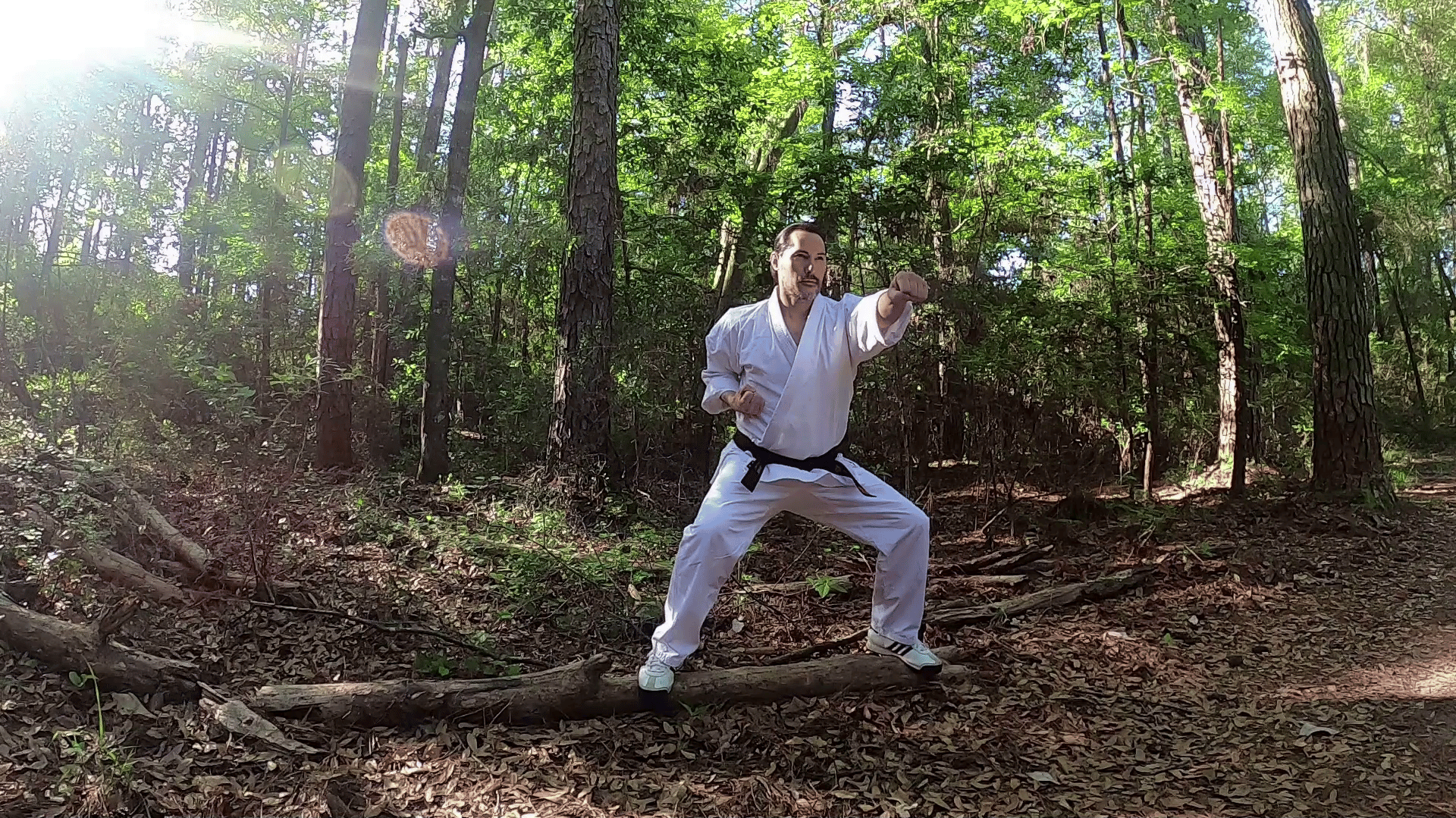
I took my martial arts training outside for this session at Historic Blakeley State Park in Spanish Fort, Alabama. In this video, I go through different outdoor drills using nature as part of the training — jogging, meditation, shadowboxing, tree footwork, kicking alignment, and log balance drills. Training outdoors challenged my balance, focus, footwork, and control in a different way than regular indoor training. Nature became the dojo, and every drill helped build awareness, confidence, and better movement.
The Modern-Day Martial Artist
4/26/20268 min read
Training in Nature: Martial Arts Outdoor Drills Vol. 1
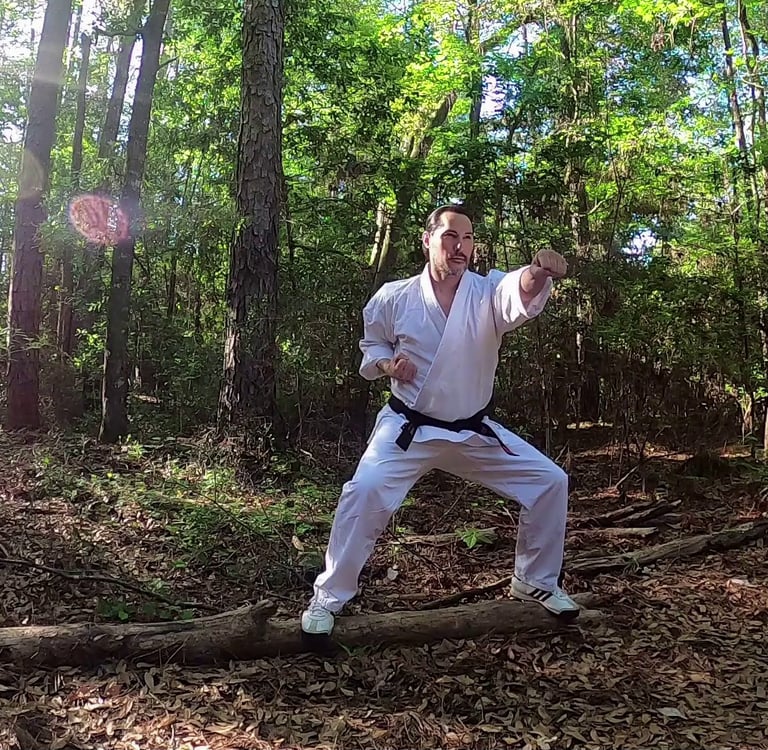
For this training session, I took my martial arts practice outside to Historic Blakeley State Park in Spanish Fort, Alabama. Instead of training on a flat dojo floor, I wanted to see how nature could challenge my movement, balance, focus, and overall control.
Training outdoors is different. The ground is uneven, leaves can affect your footing, and you have to pay attention to what is around you. It makes even simple drills feel new again. This video was fun to make, but it also challenged me in ways regular indoor training does not.
Nature has a way of making you slow down, focus, and move with more purpose. Every step matters. Every stance has to be adjusted. Every kick, block, or strike has to be done with control.
Here is a breakdown of the drills from Martial Arts Training in Nature: Outdoor Drills Vol. 1.
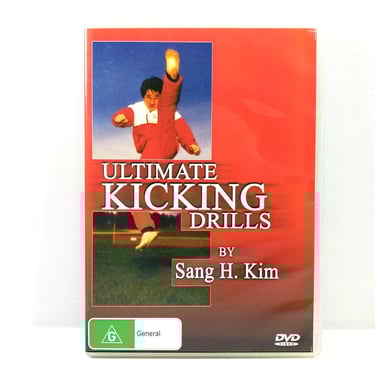
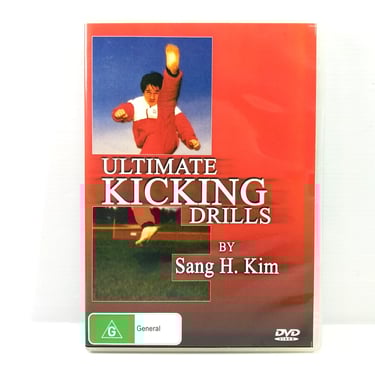
A Personal Influence: Sang H. Kim and Ultimate Kicking Drills.
Before I get into the outdoor drills, I have to mention one of the martial artists who influenced the way I look at kicking practice: Sang H. Kim.
When I was in high school, I bought his Ultimate Kicking Drills VHS off eBay. I watched that tape over and over again. His speed, flexibility, control, and Taekwondo kicking technique were incredible to me. It was one of those videos that made me want to train harder and really study how kicks worked.
Sang H. Kim is a respected martial arts author, instructor, and video producer who has created many martial arts training resources over the years. His official website describes him as a martial artist and author of books on martial arts, fitness, motivation, and mindfulness.
Ultimate Kicking Drills was one of those martial arts VHS tapes that stood out to me. It was connected with Turtle Press, a company known for martial arts books, articles, and instructional training material. Turtle Press has featured Sang H. Kim’s martial arts training content, including Taekwondo and kicking instruction.
That tape had a big influence on me. It showed me that kicking is not just about power. It is about balance, chambering, control, speed, retraction, and clean technique. A lot of that same mindset carries over into my outdoor kicking drills today.
When I use a tree for alignment, practice kicks slowly, or work balance on uneven ground, I can still feel some of that early influence from watching Sang H. Kim’s kicking drills back in high school.
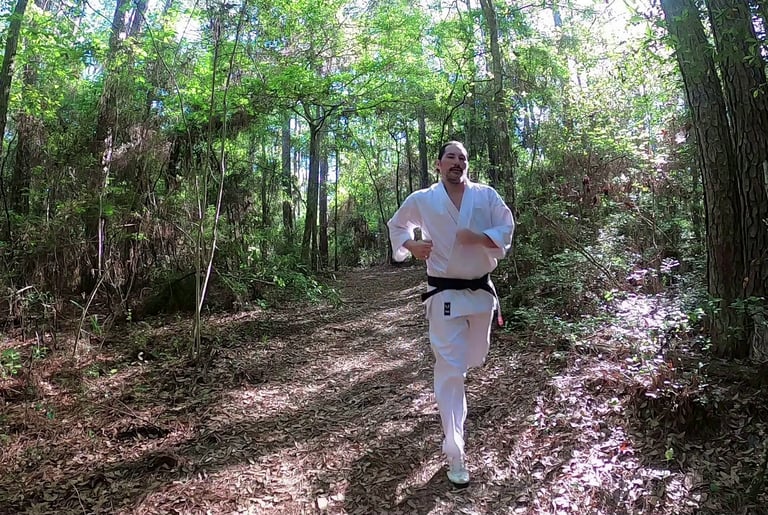
Drill 1 — Light Jog Warm-Up
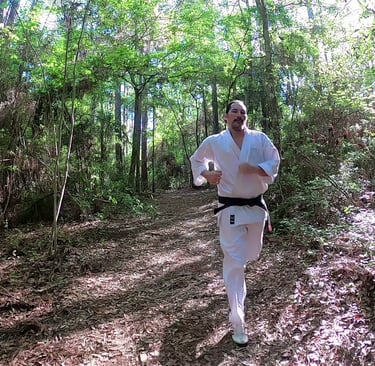
I started the session with a light jog to get the body ready.
Before doing punches, kicks, stances, or balance drills, it is important to warm up. A light jog helps loosen the legs, hips, knees, ankles, and core. It also gets the blood flowing and helps lower the chance of injury.
Since I was training outside, warming up was even more important. The ground was not perfectly flat, so I needed my legs and joints ready before moving into the harder drills.
This was not about running fast. It was just about getting the body moving and preparing for the training ahead.
Main purpose:
To warm up the body and prepare for movement.
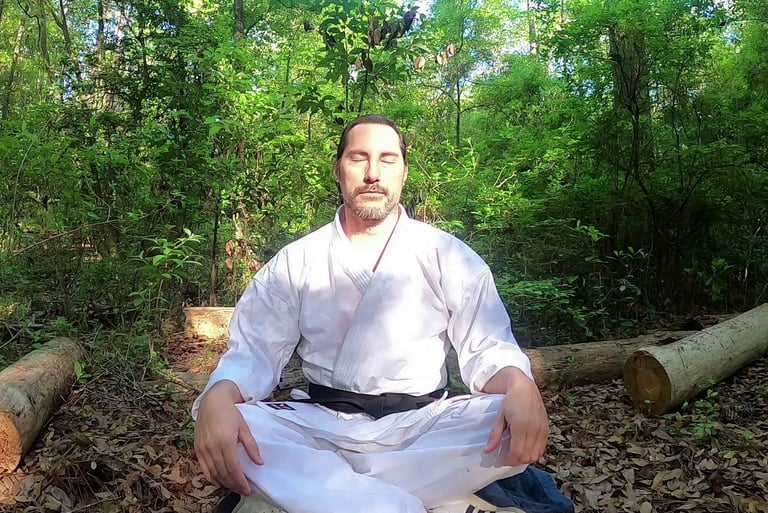
Drill 2 — Meditation and Sensory Awareness
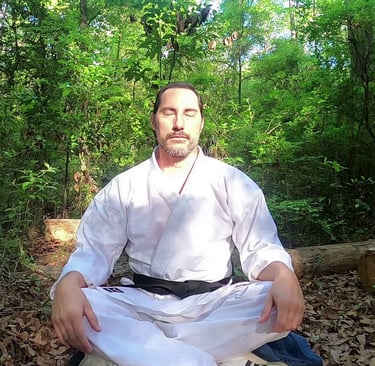
Before jumping into the physical part of training, I took a moment to sit, breathe, and become aware of my surroundings.
This part of the training was about slowing down. I listened to the wind, the sounds around me, and focused on the fresh air and the feeling of being outside.
Martial arts is not just about fighting or technique. Awareness is a big part of training too. Being calm, focused, and alert can help you move better and think clearer.
Training outside makes this even more noticeable. You hear the trees, feel the breeze, and become more connected to the space around you. It puts you in a different mindset before the physical drills begin.
Main purpose:
To calm the mind, sharpen focus, and train awareness before moving.
Drill 3 — Shadowboxing: Punches, Kicks, Blocks, and Stances
After warming up, I moved into shadowboxing.
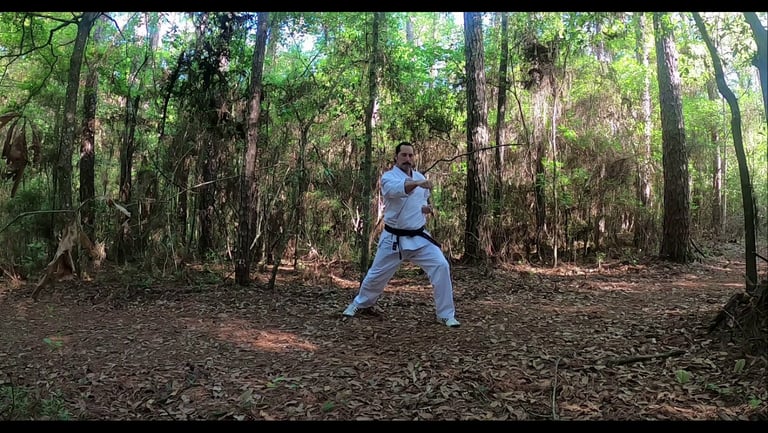
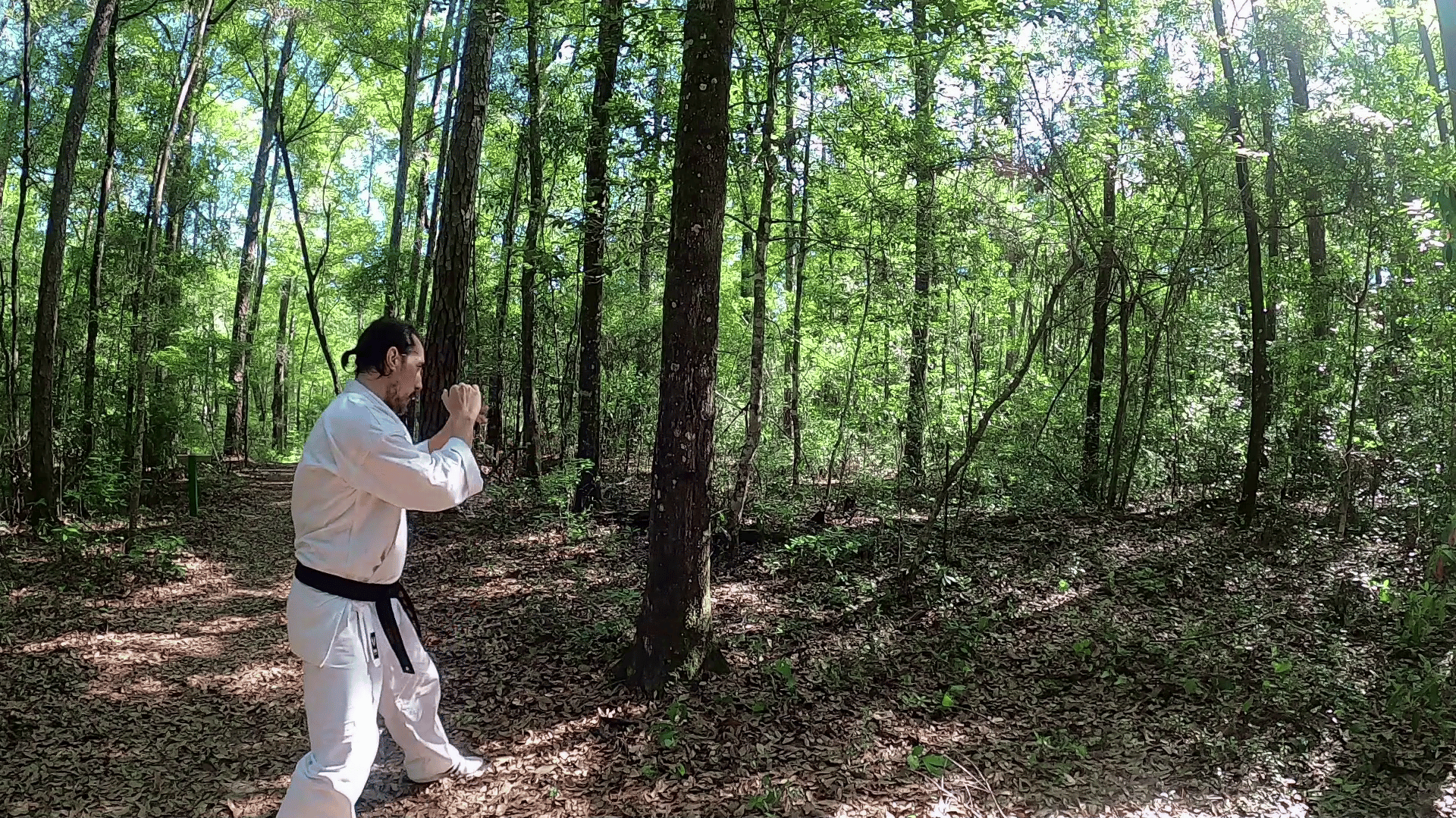
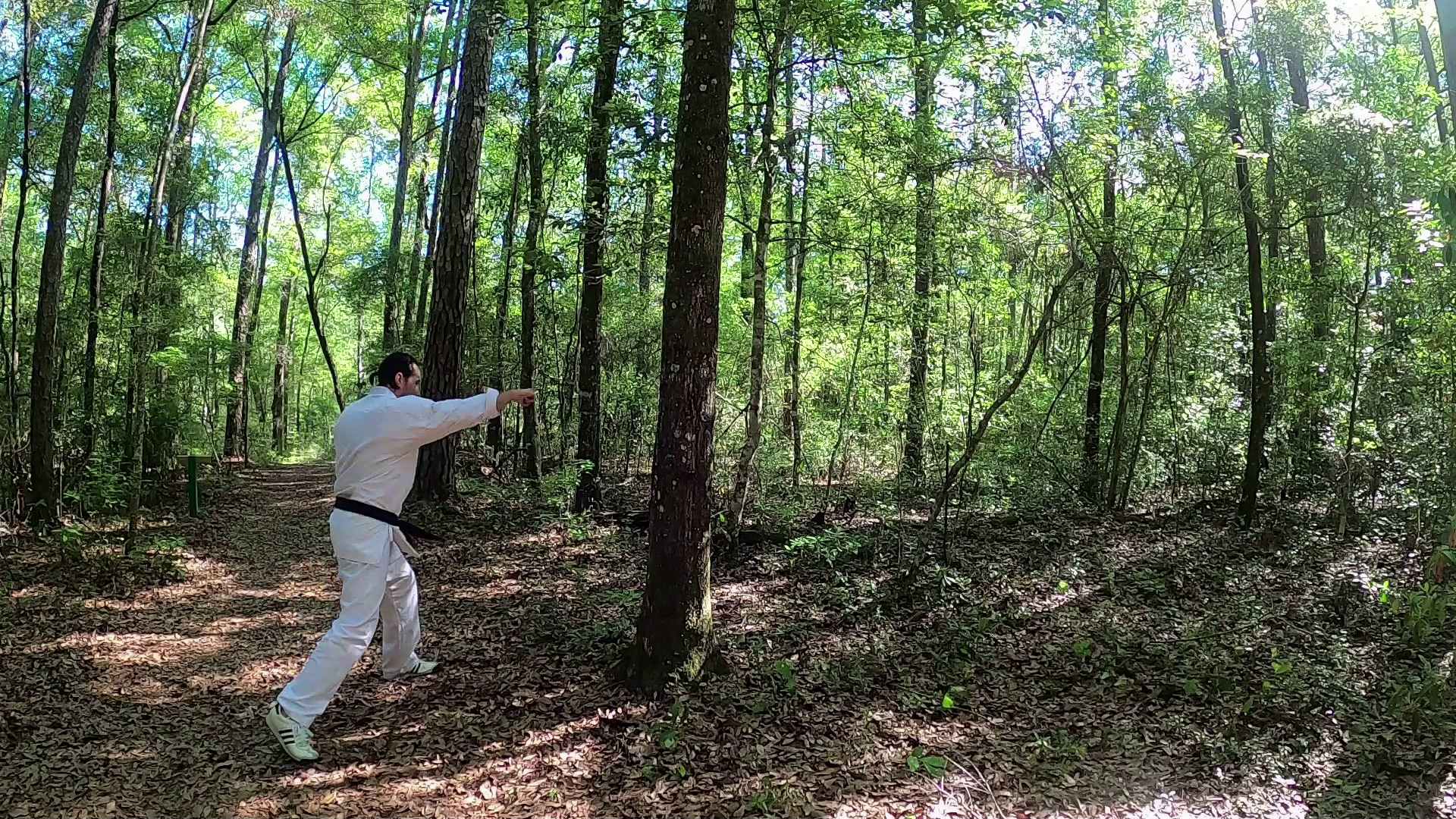
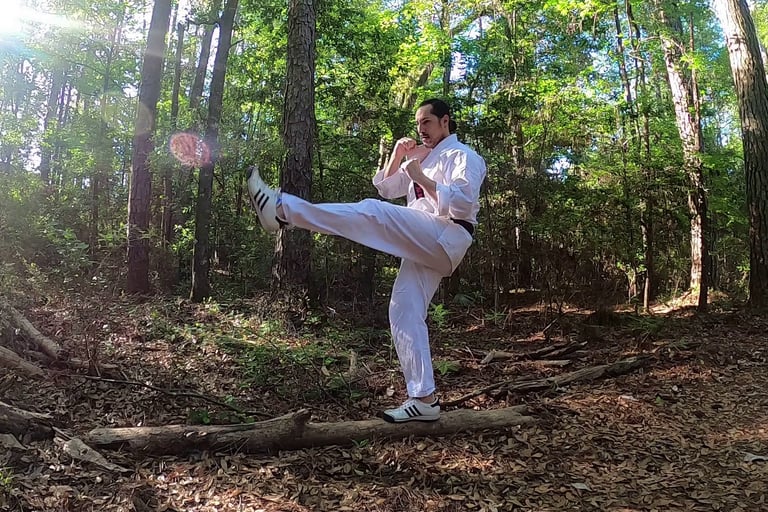
I worked on punches, kicks, blocks, and stances while moving around naturally. Shadowboxing is a great way to practice technique because you can focus on form, balance, and movement without needing a partner.
The outdoor setting made this more challenging. The leaves and uneven ground made me pay attention to where I stepped. That is one of the benefits of training outside. You cannot just move without thinking. You have to stay balanced and controlled.
This drill also helped me connect different parts of martial arts together. Instead of only practicing one punch or one kick, I was able to flow between techniques, footwork, and stances.
Main purpose:
To work technique, coordination, balance, and movement control.
Drill 4 — Eyes Closed Techniques
This drill was about body awareness.
I practiced techniques with my eyes closed, including punches, kicks, blocks, and martial arts movements. When you close your eyes, you cannot rely on sight. You have to feel your stance, your balance, and your body position.
This drill should be done slowly and safely. The goal is not speed. The goal is control.
It helps test whether your techniques are really balanced or if you are relying too much on your eyes. You start to notice if your stance is off, if your weight is shifting too much, or if your body is not lined up correctly.
Main purpose:
To build muscle memory, balance, confidence, and body control.
Drill 5 — Circling Around the Tree Footwork
For this drill, I used a tree as a training partner.
I circled around the tree while staying in a fighting stance. This helped me work on footwork, angles, and movement.
One important thing I focused on was not crossing my legs. When you cross your legs, you can lose balance or get caught in a bad position. The goal was to keep my feet under me and stay ready while moving.
The tree gave me something to move around, almost like an opponent or center point. It helped me practice getting to different angles instead of just moving straight forward and backward.
Main purpose:
To improve footwork, balance, and angle control.
Drill 6 — Circling Around the Tree with Strikes
After working the footwork, I added punches and kicks while circling the tree.
The idea was to move as if the tree was an opponent. I practiced striking from different angles while keeping my stance and balance.
This drill helps connect movement with offense. It is easy to throw a punch while standing still, but it is harder to strike while moving and keeping good form.
I was not trying to hit the tree hard. The tree was just a reference point for distance, angles, and movement. The focus was on control, not power.
Main purpose:
To practice striking while moving and attacking from different angles.
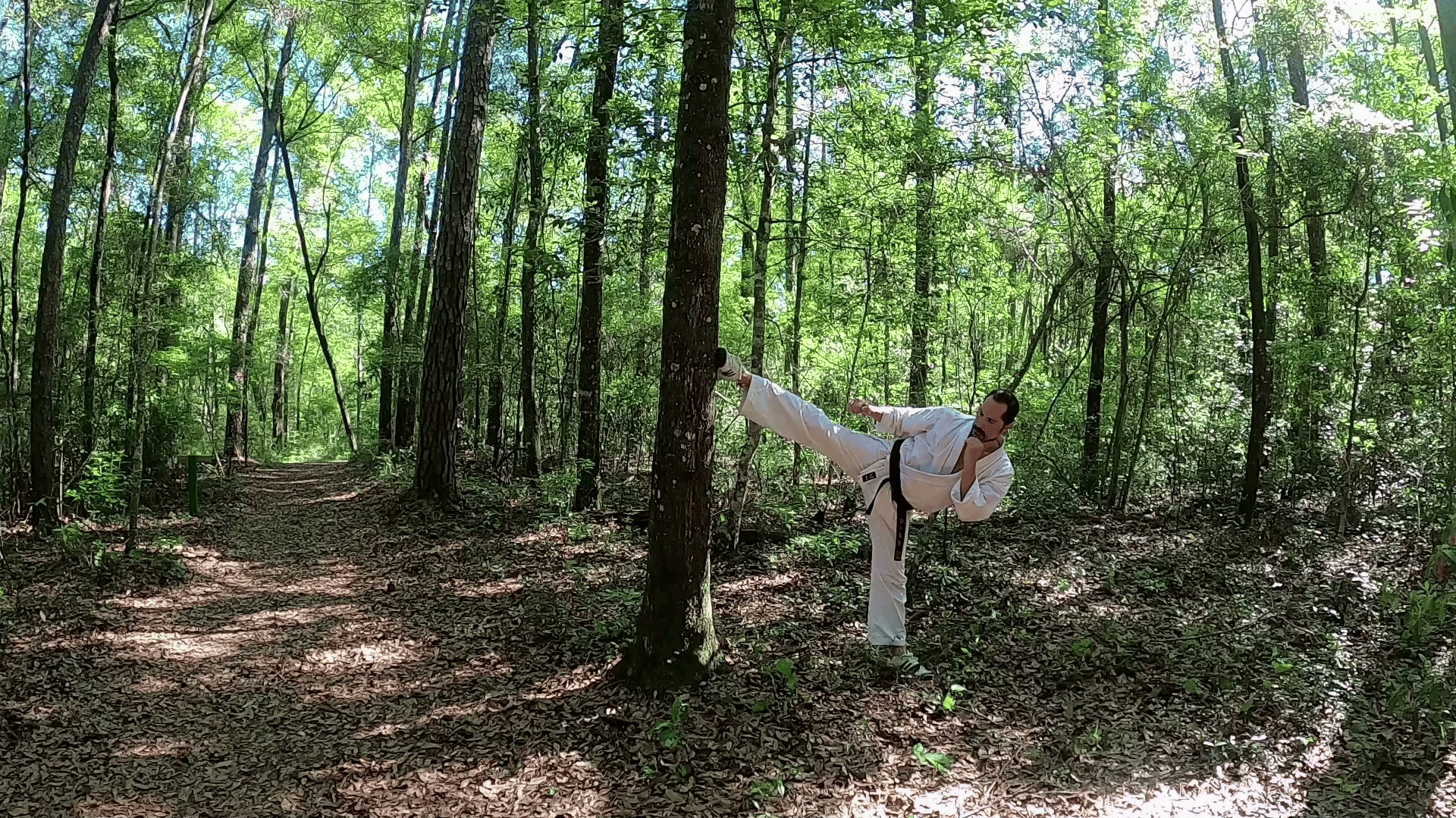
Drill 7 — Tree Alignment Kick Drill
This drill focused on kicking alignment.
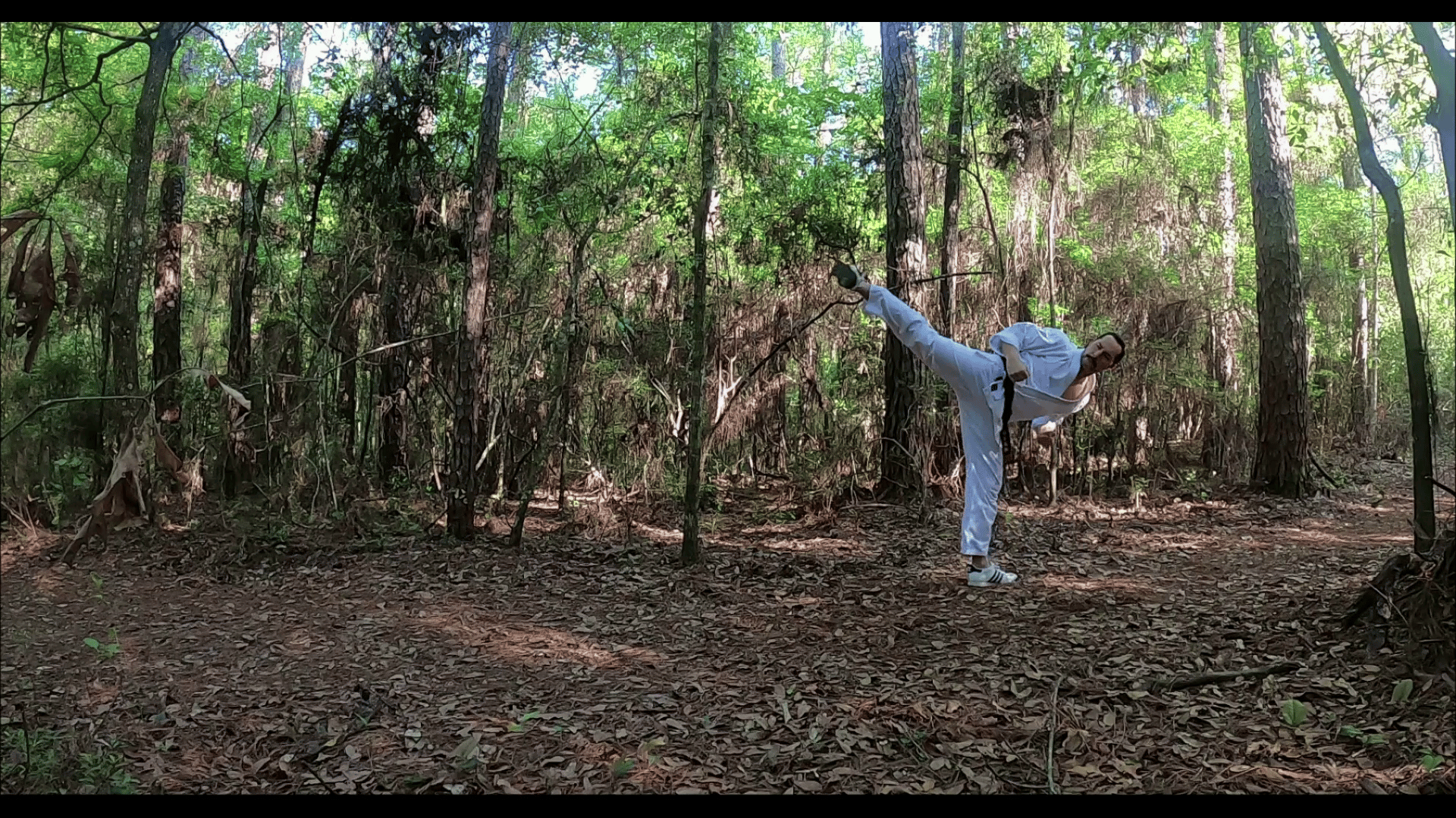
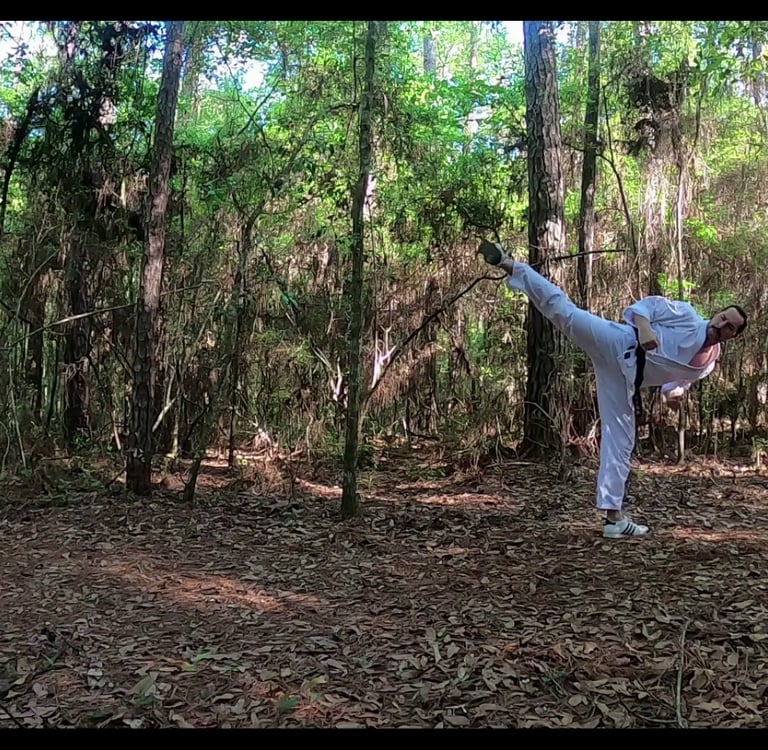
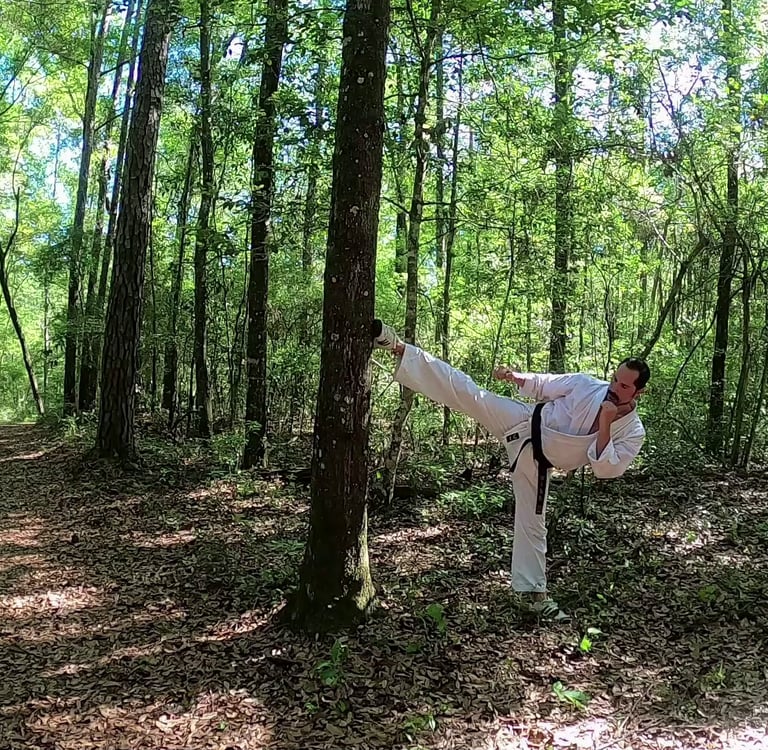
I lightly placed front kicks, side kicks, and round kicks against the tree. The goal was not to kick the tree with power. It was about checking the line of the kick, hip position, balance, and control.
This is a good way to slow the kick down and make sure everything is lined up correctly. It also helps with retraction, which means bringing the leg back under control after the kick.
This drill reminded me a lot of the kind of control I admired in Sang H. Kim’s kicking videos. A good kick is not just about throwing the leg out. It is about how the kick starts, how it lines up, how it reaches the target, and how it returns.
Main purpose:
To improve kick placement, balance, hip alignment, and retraction.
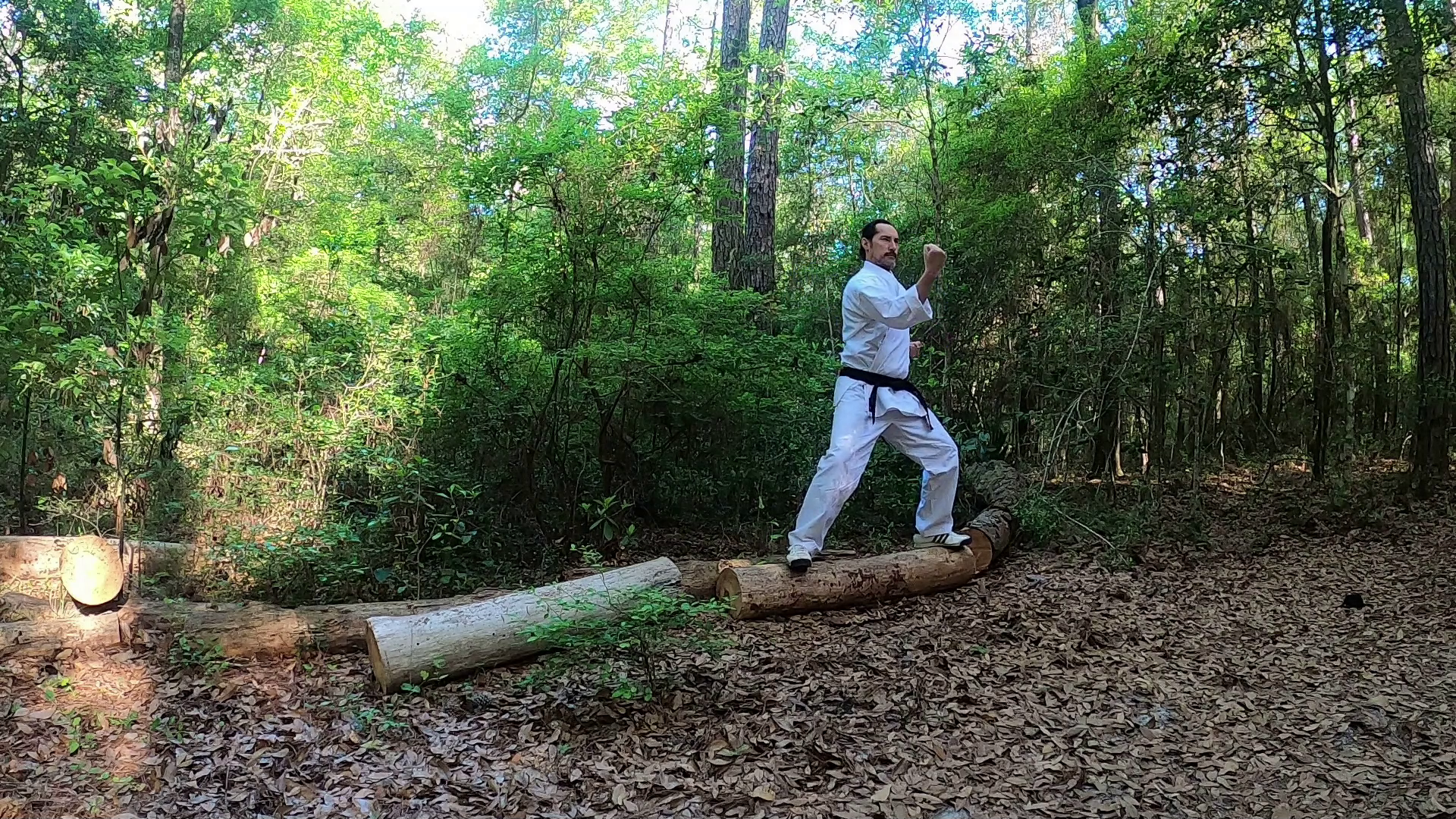
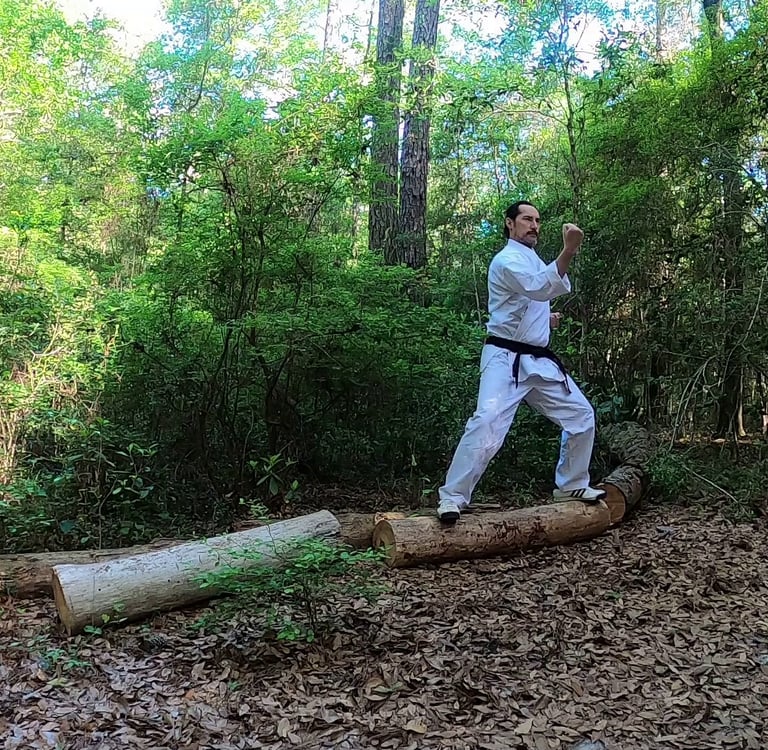
Drill 8 — Small Log Balance Drill
For this drill, I started on a small log close to the ground.
I practiced fighting stance and horse stance while trying to stay balanced. Even though the log was small, it still made the stances more challenging because the surface was narrow and uneven.
This drill helps build leg strength and confidence. It also makes you pay attention to posture and where your weight is.
A stance can feel strong on flat ground, but once you step onto an uneven surface, you find out how much control you really have. That is what makes this drill useful.
Main purpose:
To improve balance, stance strength, and confidence.
Drill 9 — One Foot Log Progression
This drill was a safer way to add techniques while using the log.
I started with one foot on the log and one foot on the ground. From there, I practiced throwing a punch or kick, then returning back to a stable position.
This is a good progression because it lets you work balance without going too far too fast. The focus is control, not speed.
It also helps with confidence. You are still challenging your balance, but you have one foot on the ground to help stay safe and stable.
Main purpose:
To build balance and coordination while adding martial arts techniques.
Drill 10 — Larger Log Agility Progression
The final drill moved into a more challenging balance progression.
As I got more comfortable, I used larger logs and practiced punches, kicks, blocks, and movement between them. This made the training more difficult because I had to think about my technique and my footing at the same time.
This drill really shows why outdoor training can be useful. Nature makes you adapt. You have to stay aware, balanced, and controlled with every step.
It is important not to be reckless with this kind of training. Start low, move slow, and build confidence first. The goal is not to show off. The goal is to improve balance, control, and awareness in a safe way.
Main purpose:
To develop advanced balance, agility, movement, and awareness.
Final Thoughts
This outdoor training session was a great reminder that martial arts can be practiced almost anywhere. You do not always need a dojo or gym to work on your skills.
Nature adds its own challenges. The ground changes, your balance gets tested, and you have to stay aware of your surroundings. It makes you slow down, focus, and move with more purpose.
For me, this was a fun video to make, but it also pushed my martial arts ability in a different way. Each drill helped work on something important: balance, focus, precision, control, awareness, and confidence.
Training outside also brought back some of the inspiration I had when I was younger, watching martial arts VHS tapes like Sang H. Kim’s Ultimate Kicking Drills. Those early training resources helped shape the way I look at practice, especially when it comes to kicking, balance, control, and repetition.
Nature becomes the dojo.
Every drill is a chance to improve.
Watch the Full Video
You can watch the full video, Martial Arts Training in Nature: Outdoor Drills Vol. 1, on my YouTube channel:
The Modern Day Martial Artist
https://www.youtube.com/watch?v=JRJeDLMB7Vk
If you enjoy the video, please make sure to like, comment, and subscribe to the channel. Your support helps me keep creating more martial arts training videos, outdoor drills, self-defense content, martial arts history posts, and training ideas.
Thank you for watching and supporting the journey.
© 2026