About Shorinji Ryu Jujitsu
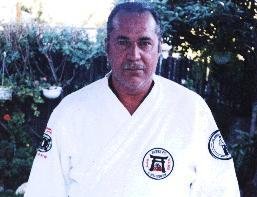
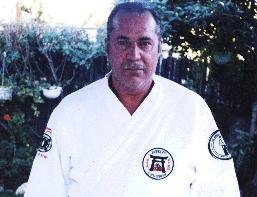
Shorinji Ryu Jujitsu is a practical Japanese Jujitsu-based self-defense system associated in the United States with Hanshi Kenneth L. Penland and the International Shorinji Ryu Jujitsu Federation. Ken Penland is listed by several Shorinji Ryu / World Budokan sources as the founder and chairman of the International Shorinji Ryu Jujitsu Federation. These sources describe him as a lifelong martial artist who began training as a child in the 1950s under his father, who was a U.S. Army member and black belt in both Karate and Judo. [1]
Penland’s martial arts background was broad. Sources state that in 1962 he trained in Kempo Karate under Ed Parker and also trained in Judo and Jujitsu under Harley S. Reagan. He later served as a U.S. Army Airborne Ranger in Vietnam during 1967–1968. In the mid-1970s, he trained in Kenshinkan Shorin Ryu Karate and Kobudo under Grand Master Fusei Kise, and later became affiliated with Yuichi Kuda of the Shorin Ryu Matsumura Kempo Karate Association. [1]
Shorinji Ryu Jujitsu as taught by Penland is best understood as a combat-oriented self-defense system rather than a tournament sport. The curriculum includes throws, takedowns, joint locks, pins, chokes, striking, pressure-point methods, ground defense, weapon defenses, and practical self-defense applications. The Warrior Jujitsu manual by George Alexander and Ken Penland is described as the official training manual of the International Shorinji Ryu Jujitsu Federation and covers the system from beginner level through advanced material. [2]
One important feature of the system is its use of two-person kata. Hanshi George Alexander explained in an interview that Shorinji Ryu Jujitsu includes 20 two-man kata, which function as partner training drills for Jujitsu technique. These drills help students learn timing, body movement, control, and transitions from one technique to another. Alexander also stated that the style traces its roots to Japan and that it “more or less” came from Albert C. Church, an American martial artist connected with Shorinji Tekken / Kamishin Ryu traditions. [3]
The art is not limited to one range of fighting. Students train standing self-defense, striking, throwing, joint manipulation, takedowns, grappling, and ground control. World Budokan’s description of Warrior Jujitsu lists material such as throwing techniques, wrist locks, arm bars, joint locks, immobilizations, leg locks, atemi waza, punches, kicks, pressure points, chokes, defense sets, ground fighting, street applications, and defenses against knife, club, and gun attacks. [4]
A major part of Penland’s reputation came from his connection to law-enforcement defensive tactics. Multiple sources state that he served as chief martial arts instructor for the Los Angeles Police Department’s Jujitsu and defensive tactics dojo. USAdojo also describes Penland as a civilian employee of the LAPD and part of a group of martial artists assembled to develop defensive tactics for officers. [5]
The International Shorinji Ryu Jujitsu Federation describes its purpose as preserving the original combativeness and “warrior spirit” of Jujitsu while also building character, sincerity, perseverance, and respect. This gives the system both a practical self-defense side and a traditional martial arts side. [6]
Today, Shorinji Ryu Jujitsu remains connected to instructors and organizations influenced by Penland and George Alexander. Hanshi George Alexander is listed as president of the International Shorinji Ryu Jujitsu Federation, and later instructors such as Julio “Mutch” Usera continued training in Shorinji Ryu Jujitsu after Penland’s passing. [7]
Important note: Shorinji Ryu Jujitsu should not be confused with Shorinji Kempo, which is a separate Japanese martial art founded by Doshin So in 1947. The names are similar, but the organizations, histories, and training structures are different. [8]